How to Set Up a Tarp Shelter
Learn the fundamentals of tarp shelter setup, from site selection to securing guy lines. Master the skills that keep you dry and protected anywhere.
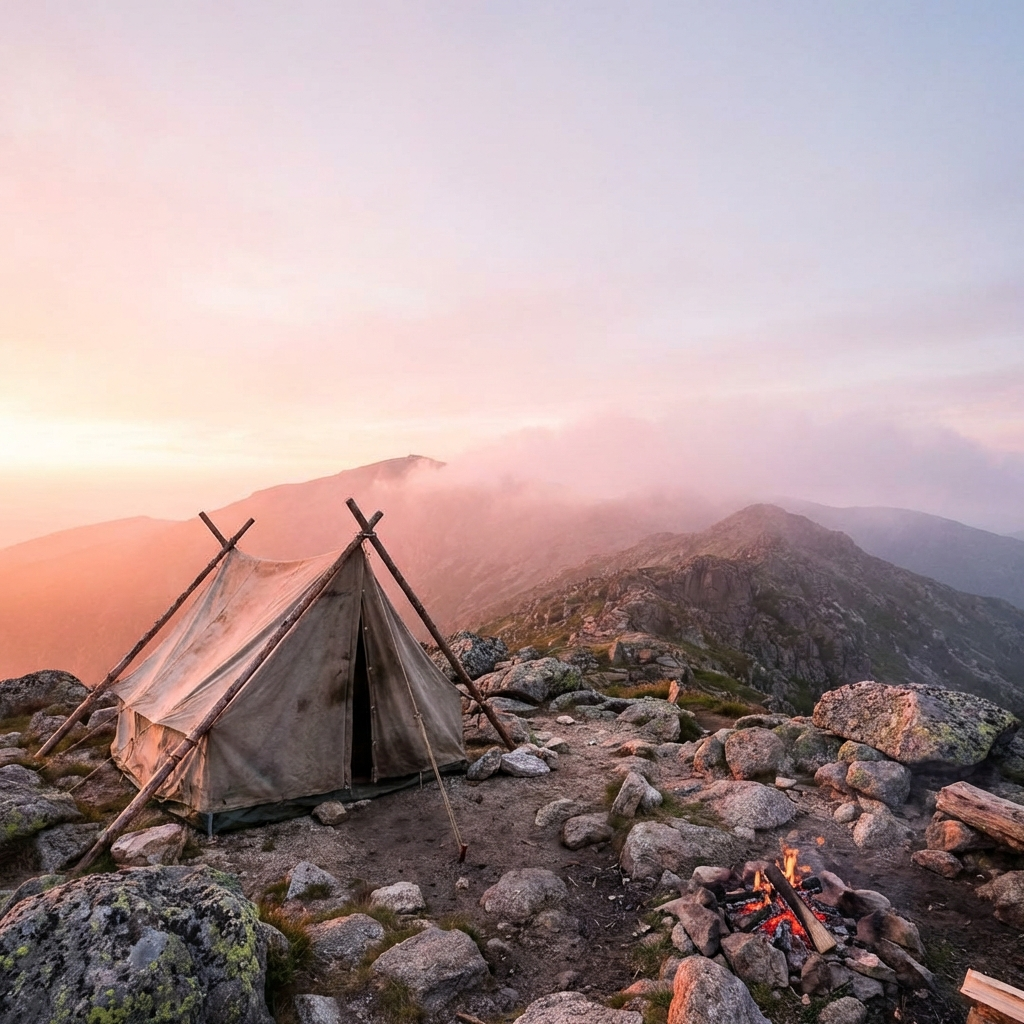
Overview
A good tarp shelter wins you freedom. Learn to set one up in any terrain, any weather.
A tarp is camping’s most versatile tool. It weighs barely anything, packs small, and can be configured into a dozen different shelters. Proper setup means the difference between dry comfort and wet misery.
Understanding Your Tarp
Tarp anatomy. Most camping tarps are rectangular, 10x12 feet or similar, with grommets (metal rings) at corners and edges. These grommet points are your anchor locations.
Tarp material matters. Silnylon is the gold standard: ultralight, waterproof, and durable. Cuben fiber is lighter but more delicate. Canvas tarps are heavier but virtually indestructible.
Additional supplies needed. Bring guylines (paracord or specialized tarp lines), stakes, and carabiners or prussik knots for adjustable attachment points.
Site Selection Essentials
The best tarp is useless on bad ground.
Look for two anchor points. Identify two sturdy anchor points (trees, boulders, terrain features) roughly 12-20 feet apart. Too close and your tarp sags. Too far and you overtension the grommets.
Assess the terrain. Check for:
- Water flow. Position on slightly higher ground to shed water away.
- Wind direction. Face the enclosed end into prevailing wind.
- Natural windbreaks. Thick brush or rock outcrops buffer strong gusts.
- Damp ground. Avoid low spots where morning dew pools.
Clear the area. Remove sharp sticks and rocks from the sleeping zone.
Think about trees. Choose healthy, living trees at least 6 inches in diameter. Avoid dead branches overhead. Position anchor lines 8-10 feet up the trunk.
The Ridge Setup (Most Common)
The ridge setup works for most conditions: one edge high, one edge low, open on both ends.
Step 1: Position the tarp. Lay your tarp flat, oriented with its long axis between your two anchor points.
Step 2: Create the ridge line. Run a guyline from the center grommet on one short end, over the ridge, to the center grommet on the other end. Tie it taut but not so tight it strains the grommets.
Step 3: Anchor the ridge. Tie each end of the ridge line to your anchor points at 5-8 feet high. Higher means more headroom and better rain shedding, but over 10 feet creates wind vulnerability.
Step 4: Guy out the sides. Pull the lower long edges down and away from the ridge, securing them with stakes at 45-degree angles.
Step 5: Secure the ends. For wind/rain protection, pull one short end slightly forward and stake it down. Leave one end open for ventilation.
Step 6: Tension evenly. Check that all lines are equally taut. Uneven tension creates sags where water pools.
The A-Frame Setup (Maximum Weather Protection)
When conditions worsen, the A-frame gives you full coverage and wind resistance.
Step 1: Create a high ridge. Tie your ridge line at 7-10 feet between anchor points.
Step 2: Pull down both long edges. Stake both long edges on opposite sides at 45-degree angles, creating a tent-like triangular profile.
Step 3: Seal one end. Stake one short end completely closed, facing away from wind. Leave the downwind end open for ventilation.
Step 4: Create an entrance vestibule. Tie the open end slightly forward to create a covered entry area for gear storage.
The Flying Tarp Setup (Ultralight)
For minimal weight and maximum versatility.
Setup process:
- Run your ridge line between anchor points at 6-7 feet high
- Drape the tarp symmetrically over the line
- Stake only the downwind side to prevent flapping
- Adjust the drape until rain sheds away from your sleeping area
- Sleep with your pad and bivy beneath, keeping sides open for airflow
This setup is fastest and most adaptable, but requires good site selection.
Water Management
Create a drip line. Water pools and drips at the lowest point. Angle your tarp so water runs off the edges, not down the middle.
Pitch for drainage. A 3-4 foot height difference over a 12-foot span creates sufficient pitch to shed water. Flat tarps collect water and leak.
Seal seams if needed. If using an older or budget tarp, apply seam sealer before your trip.
Ground water management. In heavy rain, dig a small channel 6 inches outside your tarp’s perimeter to divert runoff.
Dealing with Wind
Wind is harder on tarps than rain.
Reduce surface area. Pull down both long edges and stake them close for a low-profile setup. A fully exposed tarp becomes a sail.
Multiple anchor points. Use 5-7 stakes distributed around your tarp’s perimeter. This spreads load and prevents failure if one stake pulls out.
Low anchor height. Anchor at 6-7 feet instead of 9-10 feet when winds exceed 20 mph.
Flexible guy lines. Use paracord or elastic lines that absorb shock during gusts.
Practical Tips
Bring extra stakes. Bring 8-10 stakes instead of 4. Rocky ground causes losses.
Know your knots. Master the bowline, taut-line hitch, and trucker’s hitch. Practice at home before you camp.
Test before departure. Set up your tarp in your backyard first. You don’t want to learn in rain.
Use bright guy lines. Neon-colored paracord prevents tripping at night.
Mark your tarp. Label which end is the ridge end. This speeds setup on subsequent trips.
Your First Real Setup
Start with the ridge setup in good conditions. Pick a sheltered forest location, use two trees roughly 15 feet apart, and take your time. Once you’ve done it three times smoothly, you own the skill.
From there, experiment with A-frames in weather and flying tarps in warm seasons. Each configuration teaches you how tarps respond to tension, wind, and water.
Now you know. Happy Camping! 🏕️
More in How-To Guides
Keep reading.

Camping in Bear Country: Safety Guide
Learn bear behavior and proven safety strategies to camp confidently in bear country. Understand prevention, deterrents, and response tactics that keep you safe.
First-Time Car Camping: The Complete Checklist
Your essential guide to car camping without the overwhelm. Pack smart, plan ahead, and enjoy your first trip confidently with this comprehensive checklist.
How to Keep Food Cold Without Ice
Master proven techniques to keep your camping food fresh and cool without relying on ice. Learn passive cooling, insulation strategies, and smart food planning.